Showing posts with label research methods. Show all posts

Thursday, September 12, 2013

Teachingwithdata.org - "Pathway to Quantitative Literacy in Social Sciences"

http://teachingwithdata.org/

I found this website via the Resources for Instructors section of the ICPSR website. It has many useful resources and features that a research instructor would find very practical in lesson planning! Some of the features include:

  • Data In The News: useful for talking about ethical use of data, whether its represented correctly, etc.
  • Charts & Tables: visual aids to enhance learning (e.g., use of census data).
  • Lectures and Lessons: on a variety of topics.
  • Activities & Assignments: for use in class or out of class.
  • And lots more!
Even if you are not teaching a research methods course, this is a great way to integrate research into other class content, in order to help students better understand the link between research and practice.

Screen shot of their homepage.
So don't delay, check it out today!

Saturday, May 18, 2013

www.ats.ucla.edu/stat/ - UCLA Statistical Computing

http://www.ats.ucla.edu/stat/

I know that many of my student readers are beginning to utilize statistical software packages more as they enter into higher levels of their research process. One website that has been priceless for me as I learned how to use Stata was UCLA's Statistical Computing website. They offer so much detailed and useful information on a range of software packages, it would be hard to capture all of what they offer in this blog post. Here's an example of what they offer for SPSS:


When I was learning Stata, I found it extremely helpful to go to their Stata page and search for the command I was trying to learn. Here's an example. If you search for the Stata command "egen", here's what you'll find:

The site also offers educational resources for the classroom, including textbook examples. They also have links to prior workshops now available online: 

This resource is not to be overlooked even for the seasoned researcher, as it provides an easy to navigate refresher of common and not-so-common commands and analyses. Put it on your bookmarks list!


Monday, April 1, 2013

ICPSR - summer learning programs

http://www.icpsr.umich.edu/icpsrweb/sumprog/index.jsp

I attended a webinar hosted by the folks at ICPSR (the Inter-university Consortium for Political and Social Research) on their educational opportunities. The part I found most interesting, and applicable to my readers, was their summer learning series. They have seminars on almost every topic of quantitative data analysis you can imagine. So if you are a doc student who needs to learn (for example) about group-based modeling (or, "latent class growth analysis") you can attend a workshop by Daniel Nagin on that very topic! The workshops are pricey if you are a poor graduate student, but if you can find a way to pay for it, then you should definitely consider attending one of these specialized training opportunities for your dissertation analysis strategy. They also have workshops geared towards undergraduate and graduate students, so be sure to share this with your students. Head on over and check out the summer programs!

Monday, March 25, 2013

ICPSR - teaching & educational resources

http://www.icpsr.umich.edu/icpsrweb/instructors/index.jsp

Last month I attended a webinar hosted by ICPSR (the Inter-University Consortium for Political and Social Research) which highlighted and explained the resources available to educators and students. As a social worker who loves research and education, I was excited to learn more about these resources! (You can watch the whole webinar on YouTube! Click here.)

The first exciting tool is the Data-driven Learning Guides (aka Short Exercises). These are meant for use in non-research-methods courses, usually for undergraduates. They will be helpful for introducing students to the utility and purpose of data. ICPSR advocates for introducing data earlier in the life of a college student rather than waiting until substantive years such as junior or senior year, because if students learn earlier on that data is a useful/meaningful tool, then perhaps fewer of them will abandon research knowledge in the future. All of the modules are standardized. ICPSR has made it so easy for any educator to use this resource: they have the following sections of information on each guide: goal and concept of that particular guide, the dataset, variables contained in the dataset, and ideas for application (which help students think about certain research questions, and has links to pre-made tables for the purpose of analysis).

The next tool is the Exercise Sets. These are more suited for students in research-focused classes. They provide a series of modules designed as a sequence to follow throughout a class rather than just for one assignment. One module uses Robert Putnam's book on social capital, Bowling Alone, which is very applicable to social work education.

The last tool is the Crosstab Assignment Builder (which is in beta-level development). According to the website, "The instructor selects an appropriate dataset and identifies relevant variables. The students can be given varying degrees of autonomy; instructors can designate placement of specific variables (row, column, control) or they can leave the choice up to students."

In addition to these great tools, the website also contains pages on: resources for students, videos on teaching, and external links. Be sure to browse through the full site so you can discover the full range of the wonderful resources available here!

Thursday, February 21, 2013

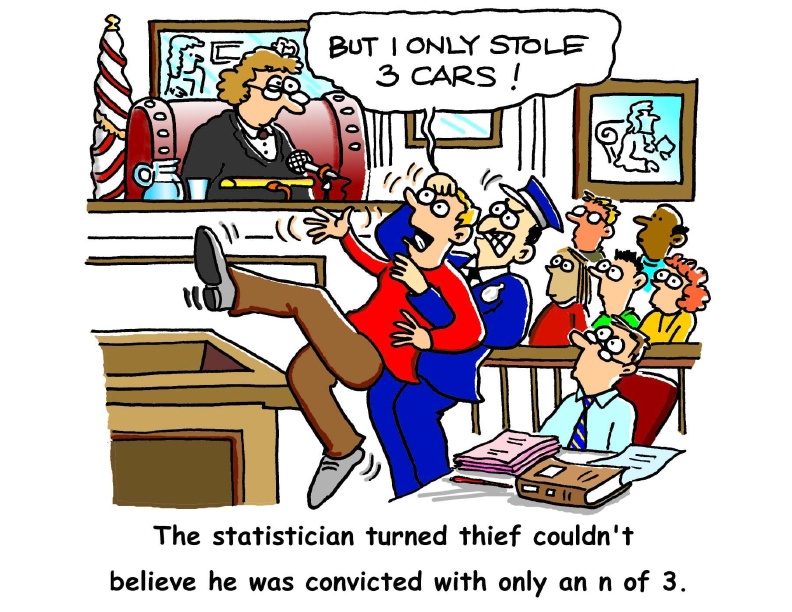
Humor and fun in statistics - Because life is too short to take everything so seriously!


I recently came across this website, which is for the organization called CAUSE (Consortium for the Advancing Undergraduate Statistics Education). It has several resources that educators would find useful in teaching statistics... to undergrads.... (Yeah, I know... that was a really original description.) One of the best parts of the website is a collection entirely devoted to humor, fun, and silliness related to statistics. 


Most of the resources are cartoons, but there are also poems, word puzzles, songs, and videos. If any of you know me personally or professionally, you know that I am silly and love to include humor in any conversation. So, of course, the "fun" section of this website was particularly enticing for me. 

Upon browsing through some of the poems, I came across a poem titled "Hiawatha Designs an Experiment". Because I love Henry Wadsworth Longfellow, I had to read it. And now, I just have to share it with you readers! It's worth reading (if you appreciate poetry, irony, and statistics). :) And in case you aren't familiar with Henry Wadsworth Longfellow, or his poem called The Song of Hiawatha, here's a link to the original poem: http://www.hwlongfellow.org/poems_poem.php?pid=283.

Hiawatha Designs an Experiment
by Sir Maurice G. Kendall (1907 - 1983)
Hiawatha, mighty hunter
He could shoot ten arrows upwards
Shoot them with such strength and swiftness
That the last had left the bowstring
Ere the first to earth descended.
This was commonly regarded
As a feat of skill and cunning.

One or two sarcastic spirits
Pointed out to him, however,
That it might be much more useful
If he sometimes hit the target.
Why not shoot a little straighter
And employ a smaller sample?

Hiawatha, who at college,
Majored in applied statistics
Consequently felt entitled
To instruct his fellow men on
Any subject whatsoever,
Waxed exceedingly indignant
Talked about the law of error,
Talked about truncated normals
Talked of loss of information,
Talked about his lack of bias
Pointed out that in the long run
Independent observations
Even though they missed the target
Had an average point of impact
Very near the spot he aimed at
(With the possible exception
Of a set of measure zero.)

This, they said, was rather doubtful.
Anyway, it didn't matter
What resulted in the long run;
Either he must hit the target
Much more often than at present
Or himself would have to pay for
All the arrows that he wasted.

Hiawatha, in a temper,
Quoted parts of R. A. Fisher
Quoted Yates and quoted Finney
Quoted yards of Oscar Kempthorne
Quoted reams of Cox and Cochran
Quoted Anderson and Bancroft
Practically in extenso
Trying to impress upon them
That what actually mattered
Was to estimate the error.

One or two of them admitted
Such a thing might have its uses
Still, they said, he might do better
If he shot a little straighter.

Hiawatha, to convince them,
Organized a shooting contest
Laid out in the proper manner
Of designs experimental
Recommended in the textbooks
(mainly used for tasting tea, but
Sometimes used in other cases)
Randomized his shooting order
In factorial arrangements
Used in the theory of Galois
Fields if ideal polynomials
Got a nicely balanced layout
And successfully confounded
Second-order interactions.

All the other tribal marksmen
Ignorant, benighted creatures,
Of experimental setups
Spent their time of preparation
Putting in a lot of practice
Merely shooting at the target.

Thus it happened in the contest
That their scores were most impressive
With one solitary exception
This (I hate to have to say it)
Was the score of Hiawatha,
Who, as usual, shot his arrows
Shot them with great strength and swiftness
Managing to be unbiased
Not, however, with his salvo
Managing to hit the target.
There, they said to Hiawatha,
That is what we all expected.

Hiawatha, nothing daunted,
Called for pen and called for paper
Did analyses of variance
Finally produced the figures
Showing beyond all peradventure
Everybody else was biased
And the variance components
Did not differ from each other's
Or from Hiawatha's
(This last point, one should acknowledge
Might have been much more convincing
If he hadn't been compelled to
Estimate his own component
From experimental plots in
Which the values all were missing.
Still, they couldn't understand it
So they couldn't raise objections
This is what so often happens
With analyses of variance.)

All the same, his fellow tribesmen
Ignorant, benighted heathens,
Took away his bow and arrows,
Said that though our Hiawatha
Was a brilliant statistician
He was useless as a bowman,
As for variance components
Several of the more outspoken
Made primeval observations
Hurtful to the finer feelings
Even of a statistician.

In a corner of the forest
Dwells alone my Hiawatha
Permanently cogitating
On the normal law of error
Wondering in idle moments
Whether an increased precision
Might perhaps be rather better
Even at the risk of bias
If thereby one, now and then, could
Register upon the target.

Monday, February 18, 2013

SSWR's doc student resource center

http://www.sswr.org/studentcenter.php
The other day, I discovered that the Society for Social Work Research (SSWR) has a very useful website devoted entirely to resources for social work doctoral students! The topics include:

  • Writing
  • Funding
  • Teaching
  • Presentations
  • Methods
  • Employment
Each topic has multiple resources associated with it, including documents and websites that you will definitely find helpful. Head over to the website today!

Friday, February 15, 2013

KhanAcademy.org - its all about the math, y'all

I'm sure many of you already know about KhanAcademy.org, but if not, it is an online repository of learning modules on just about any topic you can imagine, from math, to science and economics, and more.

I want to focus your attention on a particular set of modules at the Khan Academy on probability and statistics (click here). Kal (the founder of the site, and the author of this particular series of modules) is a brilliant guy, and really good at breaking down statistics to social worker speed. It was a great supplement to the standard coursework on quantitative methods in my program.

Topics include:


  • Independent and dependent events
  • Probability and combinatorics
  • Random variables and probability distributions
  • Descriptive statistics
  • Regression
  • Inferential statistics
Need I say more? Get to clickin', y'all. ;-)